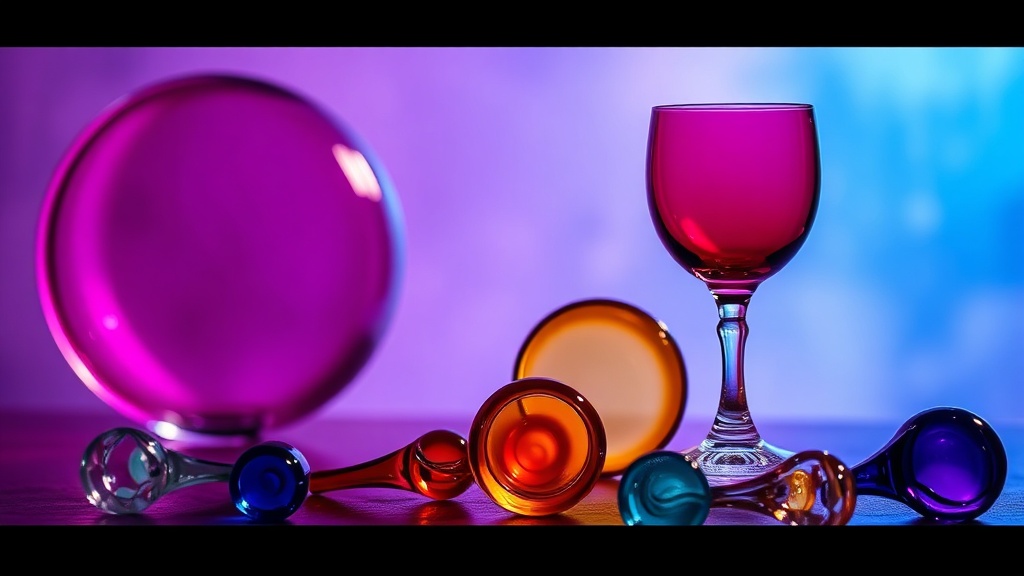
Rare Colors of the Glass World

The Deep Cobalt Blue
Emerald Green Variations
Amber and Sunburst Tones
The Rarity of Milk Glass
Ruby Red Pigments
This post examines the rarity and market value of colored glass in the world of bottle collecting, specifically focusing on cobalt blue, amber, and iridescent finishes. You'll learn how to identify genuine colored glass, the impact of light on pigment stability, and why certain hues command higher prices in the collectible market.
Why Does Glass Color Matter to Collectors?
Glass color affects both the aesthetic appeal and the chemical stability of the container. While clear glass is common, colored glass was often produced to protect the contents from UV light or to signal a premium product. For collectors of vintage soda bottles or apothecary jars, color is often the primary differentiator between a common find and a high-value centerpiece.
Certain pigments are more expensive to produce than others. For instance, cobalt blue requires specific metal oxides that can drive up the cost of production. If you're looking at a collection of vintage medicine bottles, a deep blue hue often signals a more specialized history. It's a small detail, but it changes everything when you're cataloging your shelf.
The presence of color also serves a functional purpose. Amber glass, for example, was traditionally used for beer and certain medicinal liquids because it filters out harmful ultraviolet rays. This protects the organic compounds inside from degrading. If you've ever wondered why your vintage amber-colored bitters bottle looks so much better than a clear one, it's because the color was a tool, not just a decoration.
Collectors often overlook the "why" behind the color. They just see a pretty bottle. But if you understand the chemistry—like how glass coloring works—you can better predict which pieces will hold their value. A bottle that was designed to be functional is often more interesting than one that was just "pretty."
What Are the Rarest Colors in Glass Collecting?
The rarest colors in the glass world are generally those involving expensive metal oxides, such as deep cobalt blue, emerald green, and certain shades of red or violet. These colors are harder to achieve consistently and often indicate a more premium or specialized manufacturing process.
Here is a breakdown of the most sought-after colors in the bottle collecting community:
- Cobalt Blue: Highly prized for its depth and intensity. It is a staple in high-end apothecary and perfume bottle collecting.
- Amber: While common, high-quality deep amber bottles are essential for vintage beer and medicinal collections.
- Emerald Green: A classic color for vintage soda and tonic bottles, often more striking than standard olive greens.
- Iridescent: This isn't a pigment, but a surface treatment. It creates a "oil slick" effect that is highly desirable in mid-century glass.
- Ruby Red: Extremely difficult to produce without specialized additives, making these pieces quite rare.
It's worth noting that rarity isn't just about the pigment. Sometimes, a specific shade of green might be common, but a specific shade of "aqua" might be rare due to a limited production run. You have to look closely at the light hitting the glass. If the color looks "flat," it might be a cheaper production run. If it has depth, it's likely a higher-quality piece.
I've seen many collectors chase a specific color only to realize they didn't check the translucency. A translucent blue is much more valuable than a solid, opaque blue. The light should play through the glass, not just bounce off it. (This is a common mistake, so don't let it be yours.)
If you are dealing with delicate pieces, remember that light can be an enemy. Even though color protects the contents, the light can eventually fade certain pigments if they aren't high-quality. You might want to look into keeping glass bright and dust-free to ensure your collection stays in top shape.
How Do You Identify Genuine Colored Glass?
To identify genuine colored glass, you should look for consistent pigment throughout the material rather than just a surface stain or a coating. Real colored glass will show the same hue when viewed from different angles and through different thicknesses of the glass walls.
A quick way to test this is the "edge test." Take a look at the rim or the base of the bottle—the areas where the glass is thickest. If the color remains consistent in those thick areas, it's likely true colored glass. If the color disappears or looks significantly lighter at the base, you might be looking at a clear bottle with a surface tint or a coating.
| Color Type | Identification Method | Common Use |
|---|---|---|
| Cobalt Blue | Check depth in thick base areas | Apothecary & Perfume |
| Amber | Look for uniform saturation | Beer & Medicinal |
| Iridescent | Rotate under direct light | Mid-century Decor |
| Aqua/Teal | Verify color in thin-walled sections | Soda & Tonic |
Don't get fooled by "painted" glass. Some modern decorative bottles use a colored coating to mimic vintage pieces. This is a huge red flag. If the color looks like it's sitting on top of the glass rather than being part of it, it's a fake. This is especially true for iridescent finishes. True iridescent glass has a structural shimmer, not a superficial sheen.
I always tell people to use a flashlight. A bright, direct light source helps reveal the internal structure of the glass. If the light passes through and the color stays strong, you've found the real deal. If the light makes the color look washed out or reveals a clear core, walk away.
Does Color Affect the Resale Value?
Yes, color significantly impacts resale value, as certain hues are more desirable to specific niches of collectors. A clear bottle might be worth $5, while the exact same bottle in a rare cobalt blue could fetch $50 or more.
The value is driven by two things: scarcity and demand. A "standard" color like clear or amber might have a high supply, which keeps the price low. However, a color that was only used for a single, short-lived brand or a specific type of medicine will always command a premium. It's a simple supply-and-demand game.
Think about the niche. If you are collecting vintage soda caps, a standard red might be common. But a rare, specialized color from a specific era could be a goldmine. This is why I often suggest keeping an eye on the history of vintage soda cap designs. The color-coding of brands was often a deliberate part of their marketing, and those specific colors are what collectors hunt for.
There's a catch, though. Sometimes, a "rare" color is actually just a sign of poor manufacturing. A bottle that has an uneven, blotchy color might be a "defect" piece. While some collectors love "error" pieces, most want a perfect, uniform color. A blotchy bottle might actually be worth less than a standard one because it looks "broken" rather than "unique."
When you're out at a flea market or an estate sale, don't just look for the shape. Look at the color. Is it a deep, rich emerald? Is it a striking cobalt? These are the details that turn a hobby into a high-value collection. If you're already taking care of your items, you might also find it helpful to review the one habit that makes collectibles more valuable, which focuses on the long-term preservation of your finds.
Ultimately, the color is the soul of the piece. It tells the story of what was inside, how it was made, and how much the manufacturer cared about the presentation. Whether it's a deep amber or a shimmering iridescent finish, the color is what makes the glass come alive. Keep your eyes peeled for those deep hues—they are often where the real treasure hides.