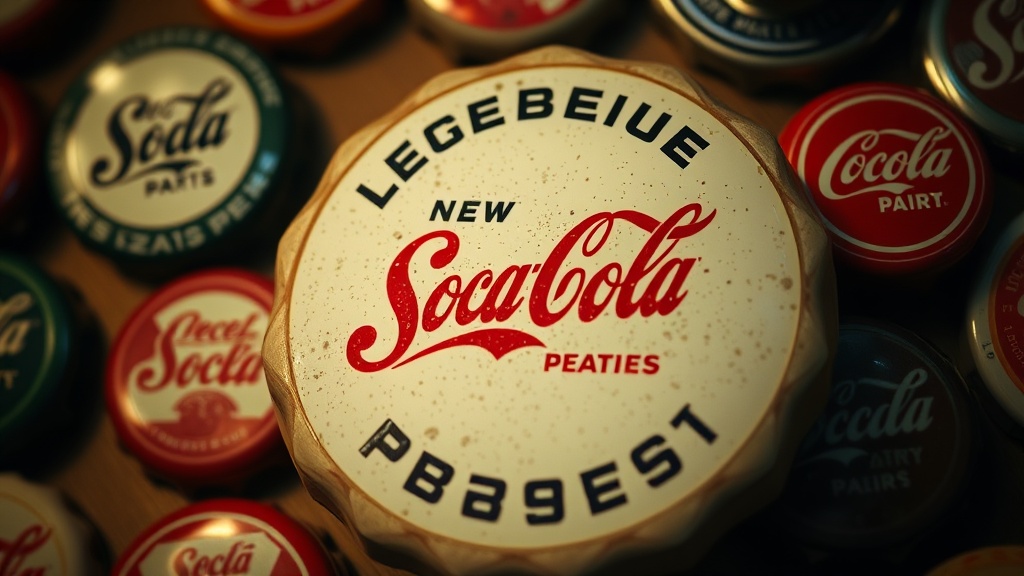
The Hidden History of Vintage Soda Cap Designs

Have you ever looked closely at a rusted, discarded metal cap and wondered why the design looks so much like a piece of modern art? This post examines the evolution of soda cap aesthetics, from the early functional metal closures to the highly branded, collectible metal-top era. We'll look at how industrial shifts and marketing trends changed the way we seal a bottle, and why certain small design details can actually change the value of your collection.
Why did soda cap designs change so drastically in the 20th century?
Soda cap designs changed primarily because of the transition from heavy, functional metal closures to lightweight, high-speed automated production systems. In the early 1900s, bottle caps were often thick, heavy, and relatively plain. They were tools first—designed to keep carbonation trapped—and marketing pieces second. It wasn't until the mid-century that the "graphic" cap became a standard part of a brand's identity.
The shift was driven by the rise of mass production. When companies like Coca-Cola or Pepsi began dominating global markets, they realized that the tiny surface area on top of a bottle was prime real estate. A cap isn't just a seal; it's a tiny billboard. This transition moved us from the simple "crown cork" era into a period of intense, colorful competition.
The crown cork itself—the standardized design we recognize today—was patented by William Painter in 1892. Before this, sealing a bottle was a messy, inconsistent business. The standardized crown cork allowed for speed. It also allowed for the birth of the "small collectible" market we see today. It's a small detail, but it changed everything for the bottling industry.
The Evolution of Materials
If you're hunting for vintage items, you'll notice a clear divide between the heavy-duty metal era and the more modern, thinner aluminum or plastic-lined versions. The early metal caps were often unlined or used basic lacquer, which meant they were prone to rust if not stored correctly. This is a major factor for collectors to keep in mind.
If you want to keep your metal items from degrading, you should follow certain protocols. I often suggest looking into essential care tips for your collectible bottles and caps to ensure that oxidation doesn't ruin a good find. A little bit of moisture can turn a pristine vintage cap into a piece of orange rust in a matter of months.
The timeline of materials generally follows this pattern:
- Late 1800s - Early 1900s: Heavy iron and steel crowns with minimal branding.
- 1920s - 1950s: Introduction of colorful lithography (printing directly on the metal).
- 1960s - Present: Transition to lightweight aluminum and plastic-lined liners for better seal integrity.
What makes a vintage soda cap valuable to collectors?
The value of a vintage soda cap is determined by its rarity, the clarity of its-printed graphics, and the specific brand or era it represents. A common cap from a generic soda brand won't fetch much, but a rare, uniquely designed cap from a defunct regional bottler can be a prize. Collectors look for "uncirculated" looks—caps that haven't been bent or heavily rusted.
It isn't just about the brand name, though. Often, it's the small things. A cap with a specific error in the printing, or a version that used a specific color palette that was only used for a single year, can be worth significantly more than a standard version. It’s the nuance that matters. I've seen collectors spend hours debating the difference between a 1950s red and a 1960s red on a single brand's cap.
Here is a quick breakdown of what drives value in the "Smalls" category:
| Factor | Low Value | High Value |
|---|---|---|
| Condition | Heavy rust or bent edges | Mint condition, flat edges |
| Graphics | Faded or scratched | Crisp, vibrant, uncirculated |
| Rarity | Common mass-produced | Limited edition or defunct brand |
| Material | Standard steel | Unique alloys or early prototypes |
One thing to watch out for is the "bent" cap. Many people think a cap that's been popped off a bottle is more "authentic," but for a serious collector, a bent rim usually kills the value. If you're buying or selling, look for the "flatness" of the top surface. A perfectly flat, unblemished top is the gold standard.
How can I identify a rare soda cap design?
Identification starts with examining the rim and the center graphic for specific hallmarks like patent dates, manufacturer names, or unique color combinations. You should look for the "crown" count—the number of teeth around the edge—as this can sometimes indicate the age or the specific machine used for sealing. A different number of teeth can often signal a transition in manufacturing technology.
Don't just look at the logo. Look at the fine print. Often, the manufacturer's name (the company that actually made the cap, not necessarily the soda brand) is printed in tiny letters around the edge. This is a huge giveaway for dating a piece. For example, if you see a specific metal alloy or a certain type of printing-on-metal technique, you can narrow down the decade quite easily.
The process of identification usually follows these steps:
- Check the center: Is it a brand logo or a generic design?
- Inspect the rim: Count the teeth and look for any embossed text or dates.
- Examine the material: Is it steel, aluminum, or a composite?
- Look for errors: Misprints or color shifts are often the most valuable traits.
If you're unsure about a piece, I'd recommend comparing it to digital archives. Many collectors use high-resolution databases to verify their finds. It's a bit of a rabbit hole, but once you start seeing the tiny variations in typeface and color, you'll never look at a soda bottle the same way again.
One mistake I see people make is assuming that "old" always means "valuable." It doesn't. A 1980s cap might be old, but if it was produced by the billions and has no unique design elements, it's just a piece of scrap metal. True value lies in the intersection of history and design-driven scarcity. It's about finding that one piece that tells a story about a specific moment in time—a moment when a brand decided to try something new and bold.
Whether you're interested in the industrial side or the aesthetic side, the world of soda caps is incredibly deep. The transition from a simple lid to a piece of graphic art is a perfect example of how even the smallest objects in our lives carry a massive amount of cultural weight. Keep your eyes peeled during your next thrift store run or garage sale—you never know when you'll find a piece of history hiding under a pile of junk.