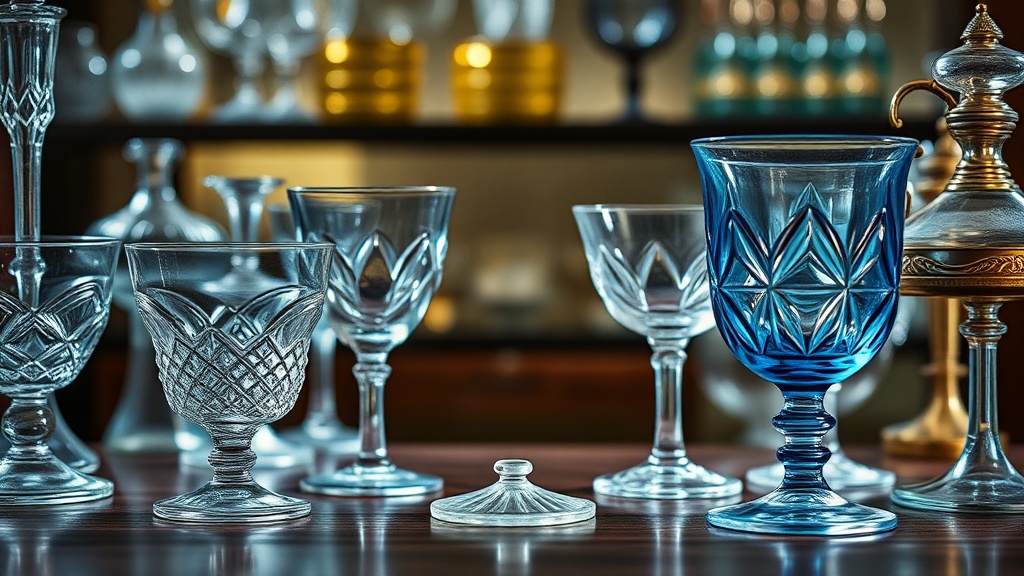
Selecting High Quality Vintage Glass for Your Collection

What Determines the Value of a Vintage Bottle?
Have you ever stared at a shelf of glass and wondered why one piece commands a premium while another, seemingly similar, sits gathering dust? It isn't always about the size or the color. When you're looking to build a collection that holds its worth, you have to look past the obvious. This guide covers the physical attributes and the historical context that differentiate a mere curiosity from a high-value collectible. We'll look at material purity, mold marks, and the structural integrity that collectors demand.
The first thing you'll notice is the texture. High-quality vintage glass often possesses a specific weight and hand-feel that modern reproductions struggle to mimic. If a bottle feels too light or "hollow," it might be a modern way-maker rather than a true antique. Collectors often look for the imperfections—the tiny air bubbles (known as seeds) or slight irregularities in the glass thickness—that prove it was manufactured during a different era. These aren't defects; they're fingerprints of history.
A significant factor is the glass itself. For example, aqua, amber, and cobalt glass have different levels of desirability depending on the era and the intended contents. A deep, rich cobalt in a medicinal bottle carries a different weight than a pale, thin blue glass. You should check the base of the bottle frequently. The Pontil mark—a scar left where a rod was attached to the base during glassblowing—is a massive indicator of age and quality. If the base is perfectly smooth and flat, you're likely looking at a more modern, machine-made piece.
Why Does Glass Color Matter to Collectors?
Color isn't just an aesthetic choice; it's a marker of chemical composition. In the early days of glassmaking, certain colors were achieved through specific additives that changed the value of the piece. For instance, a true emerald green glass from the mid-19th century is vastly different from a modern green-tinted glass. You can learn more about the chemistry of historical glass through resources like the Science History Institute, which explores how material science shaped the objects we collect today.
When you're out at a flea market or an estate sale, don't just look at the color under bright lights. Bring a small, high-intensity flashlight. Seeing how light refracts through the glass—whether it glows or looks dull—can tell you if the glass is high-quality or a cheap imitation. A high-quality vintage bottle will often have a certain translucency that reveals the depth of the color. If it looks "painted on" or surface-level, move on.
How Do You Identify Authentic Mold Marks?
Authenticity is everything in this niche. One of the most common mistakes beginners make is ignoring the subtle signs of production. Before the advent of automated assembly lines, bottles were made using various molds that left distinct marks. These marks act as a signature. You might see a seam that stops abruptly at the neck, or a slight indentation where the glass was hand-finished. These aren't flaws—they're proofs of age.
<If you see a seam that runs all the way up the neck to the very rim, you are almost certainly looking at a machine-made bottle from the late 19th century or later. True antique bottles often have a finished or ground neck that lacks this seam. This distinction is a quick way to sort the high-value pieces from the common ones. To understand the evolution of these manufacturing processes, the Smithsonian Institution offers incredible documentation on industrial history and how these tools evolved.
| Feature | Authentic Antique | Modern Reproduction |
|---|---|---|
| Neck Seam | Often missing or ground smooth | Usually runs to the top rim |
| Glass Texture | May contain seeds or bubbles | Often perfectly clear/smooth |
| Base | Pontil mark or irregular base | Smooth, machine-finished base |
Beyond the physical marks, you have to consider the provenance. A bottle that comes with a story—even a small one—is always more interesting than a piece found in a bin. However, in the world of collecting, the physical evidence of the object's manufacture is the only thing that doesn't lie. Don't take a seller's word for it; look at the glass itself. Check the weight, the seams, and the color under different light sources.
What Should You Look for in a Collector's Display?
Once you've acquired your pieces, the way you show them off matters. Displaying glass is a balancing act between visibility and protection. You want to showcase the color, but you also want to prevent damage. Avoid direct sunlight, as UV rays can actually fade certain colors over time—especially certain types of colored glass that use organic-based pigments. This is especially true for many vintage soda bottles and medicinal vials.
When setting up a shelf, consider the depth. Glass bottles can be top-heavy or awkwardly shaped. Using acrylic risers or custom-built wooden stands can help stabilize your collection. A well-organized display doesn't just show off your finds; it protects them from wayward elbows and accidental falls. Think about the light source—soft, indirect light is your friend. It highlights the curves of the glass without creating harsh glares that hide the fine details of the mold marks.
Lastly, keep an eye on your storage environment. Humidity and temperature fluctuations can affect the way certain types of glass or metal caps behave. If you're displaying bottles with original metal caps, ensure they aren't in a damp area that might accelerate oxidation. A clean, controlled environment is the best way to ensure your collection remains a stable asset for years to come.