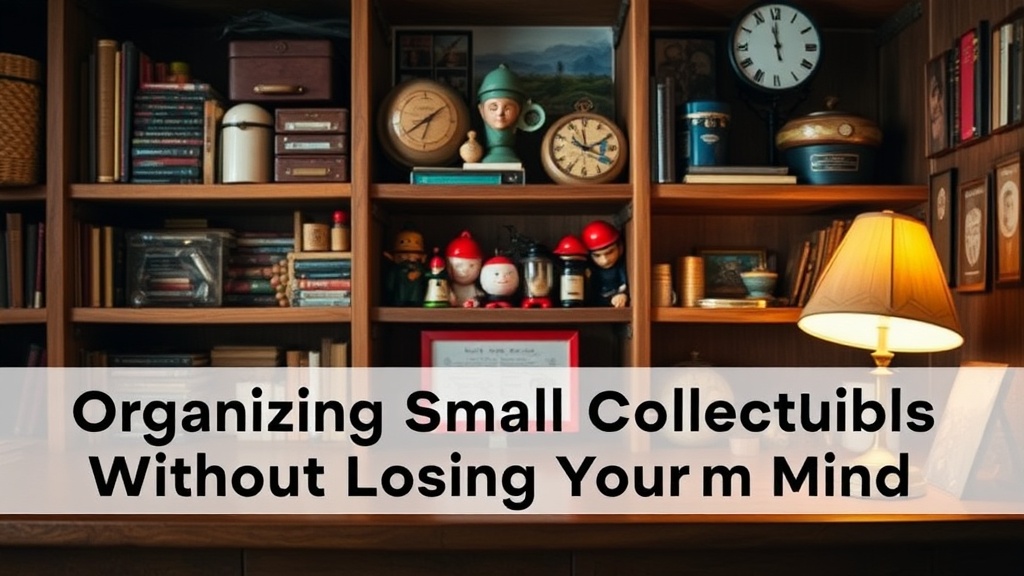
Organizing Small Collectibles Without Losing Your Mind

This guide covers practical methods for sorting, categorizing, and storing small collectibles like bottle caps, glass vials, and tiny metal trinkets. You'll learn how to group items by type, color, or era, and how to select storage solutions that prevent damage while keeping everything visible.
When your collection grows from a handful of items to a literal shelf-full, the initial excitement often gives way to a messy reality. Small items—the kind that fit in the palm of your hand—are notoriously difficult to manage. They roll away, they hide in corners, and they're easy to lose if you aren't intentional about how you keep them. Whether you're dealing with hundreds of vintage bottle caps or a set of specialized glass bitters bottles, organization isn't just about tidiness; it's about preservation and accessibility.
How do I group my collectibles for better display?
The first step is deciding on a logic for your collection. There isn't one right way, but your choice will dictate how you buy future pieces. If you're a collector of color, you might group items by hue. This looks stunning on a shelf, but it can be frustrating if you're trying to find a specific manufacturer's mark.
Most collectors find success using one of these three methods:
- Chronological Order: Best for collectors who care about the evolution of manufacturing. Grouping by decade or era helps you see how designs changed over time.
- Type or Material: This is the most practical approach for mixed collections. Keep your metal caps in one area and your glass vials in another to prevent scratching or weight issues.
- Subject Matter: If you collect themed items—like specific brand logos or certain shapes—grouping by theme makes for a much better visual story.
Don't feel pressured to pick just one. Many collectors use a hybrid approach, such as a primary category (Material) with a secondary sub-category (Era). For example, your glass vials might be sorted by type first, and then by the era they originated from.
What are the best storage containers for small items?
Choosing the wrong container can actually do more harm than good. If you're storing vintage glass, you'll want to avoid anything that creates friction or high pressure. If you're storing metal caps, you need to be mindful of oxidation and moisture.
| Item Type | Recommended Container | Reasoning |
|---|---|---|
| Vintage Bottle Caps | Clear Acrylic Dividers | Prevents denting and keeps them upright. |
| Small Glass Vials | Padded Velvet Trays | Protects against clinking and breakage. |
| Metal Charms/Smalls | Compartmentalized Boxes | Keeps small pieces from mixing and tangling. |
Avoid using cheap, thin plastic bins that can crack or warp over time. If you're working with high-value items, consider specialized display cases. A solid, heavy-duty container provides much better stability. For those who like to show off their finds, look into modular display systems that allow you to add more sections as your collection grows. This keeps your display looking intentional rather than cluttered.
Can I use display lighting to highlight my collection?
Lighting is a double-edged sword. It makes your collection look professional, but it can also be a silent killer. If you're displaying glass or colored bottles, you'll want light to catch the edges and show off the clarity. However, direct sunlight or high-heat bulbs can cause colors to fade or even cause glass to expand and crack.
Stick to LED lighting whenever possible. LEDs stay cool to the touch and don't emit the UV rays that can damage certain types of vintage pigments. If you're using a lighted display case, make sure the light source is diffused. You don't want a single harsh beam hitting a single bottle; you want a soft, even glow that highlights the texture of your items. You can find excellent lighting components for collectors through specialized hobbyist sites like Lit Displays to ensure your setup is safe.
When setting up your display, think about the "eye level" rule. Your most prized or most visually interesting pieces should sit at eye level, while the bulk of your collection can sit slightly lower. This creates a sense of depth and prevents the display from looking like a flat wall of objects. It also allows you to use height to your advantage, using small stands or risers to create layers.
Remember that organization is a living process. As you find a new piece, you shouldn't just throw it in a box. You should decide where it "lives" in your system. If you find yourself struggling to find a place for a new item, it's a sign that your current organization system might be too rigid or needs a slight adjustment. Don't be afraid to reorganize your shelves every few months to keep the collection feeling fresh and interesting.
A well-organized collection is more than just a way to keep things neat; it's a way to honor the history of the objects you've gathered. When every item has a specific home, you spend less time searching and more time appreciating the details that made you fall in love with collecting in the first place. For more tips on maintaining your inventory, check out resources like the American Bottle Collectors community to see how seasoned pros handle their archives.