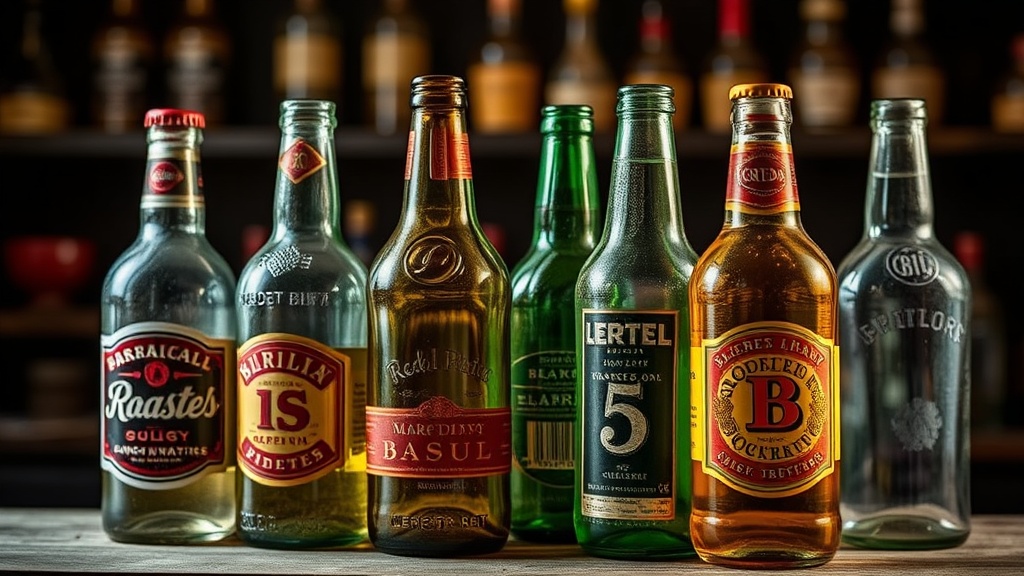
How to Decipher the Raised Letters on Your Vintage Bottles

Why Raised Marks Aren't Just Decoration
Most collectors assume the raised letters and symbols on old bottles are simply branding — the manufacturer's way of showing off. That's only half true. Those embossings actually tell a complete story about when, where, and by whom your bottle was made. Miss them, and you're essentially collecting blind. Read them correctly, and suddenly every piece in your collection carries documented provenance you can verify and research.
This guide walks through the practical process of interpreting bottle maker's marks. You'll learn where to look, what the common abbreviations mean, and how to cross-reference what you find. By the end, those mysterious ridges and letters will speak volumes — and you'll know exactly what questions to ask when adding new pieces to your collection.
What Do the Numbers and Letters Actually Mean?
Bottle embossings follow patterns — though not always obvious ones. Most marks appear on the heel (the thick glass at the base), the shoulder, or occasionally the body. Start by turning your bottle upside down. The heel is where you'll typically find the most information concentrated in one place.
You'll usually see a combination of elements: a company name or initials, a number (often two digits), and sometimes a symbol or logo. The numbers almost always indicate the year of manufacture — but here's where collectors get tripped up. A "42" might mean 1942, or it might mean the bottle was made in 1942 using a mold from 1942. Some companies used date codes that don't match calendar years at all. The Society for Historical Archaeology maintains extensive databases correlating these codes with actual manufacturers and years.
Letters typically represent the glass factory location. "AO" stands for American Optical. "FW" indicates a bottle from the Franey-Weiler Glass Company. These abbreviations weren't standardized — each company used whatever made sense to them. That's why a reference collection (or at least bookmarked online resources) matters so much. You can't memorize them all, and guessing leads to expensive mistakes.
Some bottles carry additional marks: dots, stars, or geometric shapes. These often identify the specific mold used in production. If a manufacturer ran multiple molds simultaneously, they needed to track which one produced defective bottles. Those little symbols helped quality control — and now help collectors identify genuine pieces versus reproductions.
Where Should You Look for Maker's Marks?
The location of embossing varies by bottle type and era. Soda bottles from the 1920s-1950s typically feature prominent heel marks — easy to spot once you know to check. Earlier bottles (pre-1900) often have marks on the shoulder or even blown into the pontil scar. Pharmaceutical bottles frequently carry minimal markings, sometimes just a number series along the base edge.
Lighting matters enormously here. Those raised letters disappear under harsh overhead light. Use a flashlight held at a low angle — side-lighting creates shadows that make embossings pop. Many collectors keep a small LED flashlight specifically for this purpose. It sounds excessive until you've spent twenty minutes squinting at what turns out to be a perfectly clear "Coca-Cola" marking.
For bottles with heavy patina or clouding, the marks might be partially obscured. Don't clean aggressively. Instead, make a gentle silicone mold or use aluminum foil pressed against the marking to create an impression you can read more easily. Some collectors photograph the base and increase contrast in editing software — whatever reveals the detail without risking damage to the glass.
Don't ignore the less obvious spots. Some manufacturers placed tiny marks inside the lip or along the side seam. These secondary markings often indicate the bottle's intended contents or the specific plant where it was filled rather than where the glass was blown. Both matter for complete documentation.
How Can You Verify What You've Found?
Finding marks is step one. Understanding them requires research — and not just a quick Google search. Start with specialized resources. The Federation of Historical Bottle Collectors maintains manufacturer databases that cross-reference thousands of marks with company histories, production dates, and known variations.
Pay attention to consistency. A genuine 1930s bottle won't have perfectly crisp, machine-precise embossing. Hand-blown elements show slight irregularities. Mold seams tell their own story — too high on the neck suggests modern reproduction. Tooled lips versus applied lips indicate different eras. Each detail confirms or contradicts what the marks claim.
Context helps enormously. Where did the bottle surface? A soda bottle marked "Portland, Ore" found in a Maine dump either traveled far (documented in local bottling histories) or raises authenticity questions. Regional bottlers rarely shipped cross-country. Understanding the distribution patterns of specific manufacturers helps validate (or challenge) your interpretation of the marks.
Join collector forums and ask. The bottle collecting community maintains enormous collective knowledge, and most members genuinely enjoy helping decode mysterious pieces. Provide clear photos — base, profile, close-ups of marks. Include dimensions and any provenance you have. The answers might surprise you; sometimes what looks like a manufacturer's mark is actually a distributor's code or a patent number.
Building Your Own Reference System
Serious collectors eventually develop personal reference systems. This doesn't require fancy software — a simple spreadsheet works. Document each piece: photograph the marks, record the manufacturer, note the date code, and include observations about glass color, seam patterns, and any anomalies.
Over time, patterns emerge. You'll start recognizing manufacturers by their characteristic mark placements. You'll notice that certain companies always included plant codes while others didn't. These patterns become intuitive, speeding up your evaluation process when hunting new acquisitions.
Consider creating physical impression molds of unusual marks. Two-part silicone putty (available at craft stores) creates perfect, durable copies you can label and file. This helps when comparing pieces side-by-side or consulting with other collectors remotely. The National Park Service offers excellent guidance on bottle documentation for archaeological contexts — techniques equally valuable for private collections.
Don't neglect the bottles that seem unmarked. Many carry extremely faint ghost embossings — marks worn nearly smooth by decades of handling. These require patience and proper lighting, but they often reveal themselves. An "unmarked" bottle that suddenly shows a readable base code transforms from a generic curiosity to a documented artifact with traceable history.
Common Mistakes That Lead Collectors Astray
Misreading date codes tops the list of errors. A "67" on a soda bottle almost certainly means 1967, not 1867. Glass manufacturing changed dramatically over decades — the mold type, lip finish, and glass quality all provide context that should confirm (or refute) your date interpretation. Trust the physical evidence over the number alone.
Another frequent error: assuming similar marks indicate identical origins. Bottle manufacturers reused molds, bought molds from defunct competitors, and sometimes operated under multiple names. Two bottles with identical base marks might have been produced decades apart by different companies who acquired the same equipment. Always cross-reference multiple characteristics.
Finally, don't assume reproductions won't have marks. Modern reproduction bottles often copy original markings exactly — but the glass itself betrays them. Modern soda-lime glass has different clarity and color than the original lead or lime glass. The marks might look right, but the feel, weight, and resonance when tapped tell the truth.
What Comes After Identification?
Once you've decoded the marks, the real research begins. Who was this manufacturer? How long did they operate? What products did they bottle? This historical context transforms your collection from assembled objects to documented industrial history. That amber bottle from a defunct St. Louis bottler isn't just pretty glass — it's a tangible connection to a specific moment in American commerce.
Document everything. Photograph your research sources. Save screenshots of database entries. Build files that connect your physical pieces to their paper trails. Future collectors (and potentially museums) will value this provenance enormously. More immediately, your own understanding deepens, and your eye sharpens for spotting similar pieces in the wild.
The marks on your bottles have waited decades — sometimes over a century — to be read. Take the time to listen to what they're saying. Every raised letter, every date code, every cryptic symbol represents someone's deliberate choice to identify their work. Honor that intention by learning their language.